 Brian Fencing and Gates
Gate Automation Explained: A Guide for First-Time Buyers
Understand gate operators, access controls, protective devices and power arrangements before comparing quotes.

The details
Practical considerations for your next gate or fence.
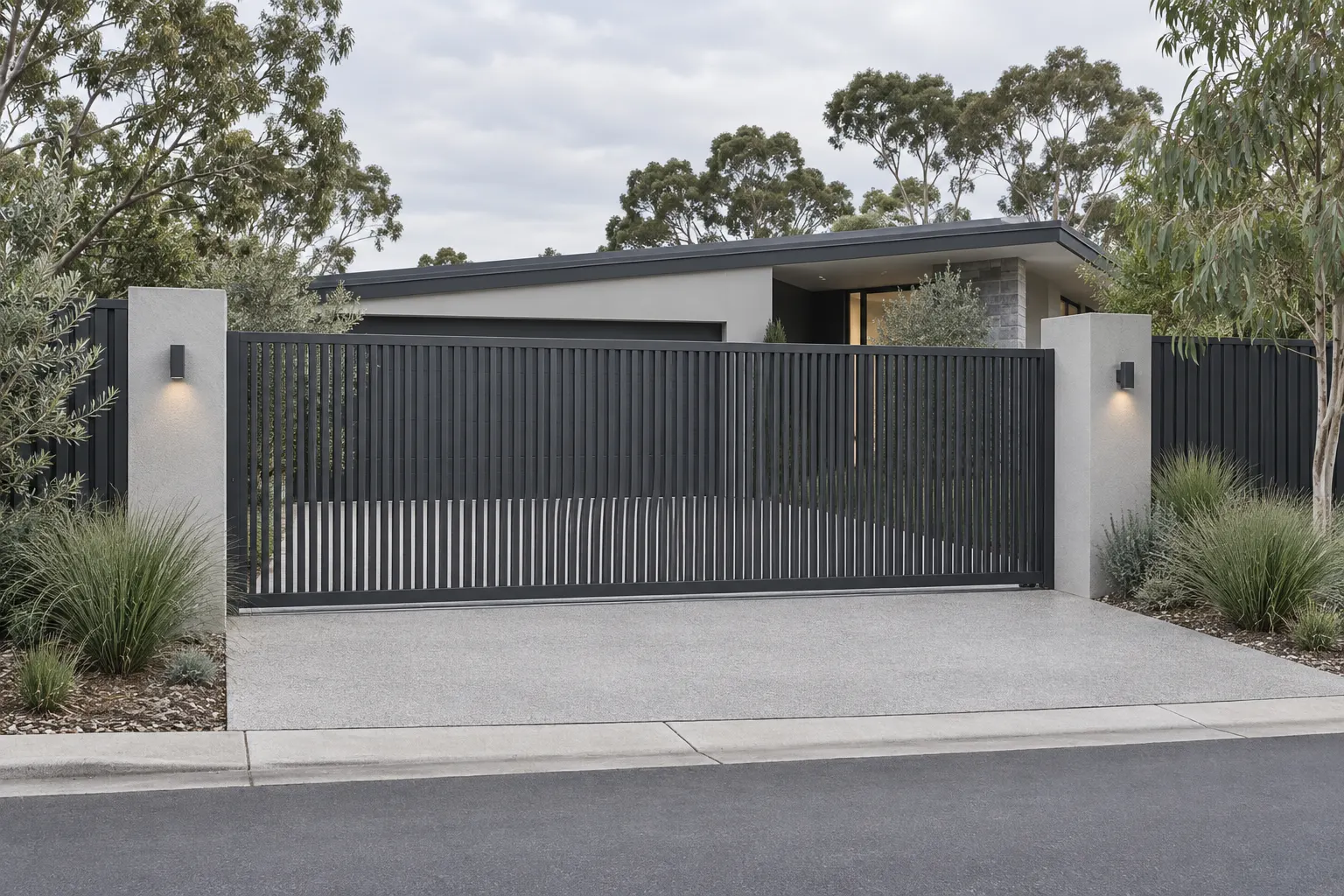
An automatic gate is a complete system: the gate, its operator, controls, power supply and protective devices have to work together. Understanding those parts makes it easier to compare quotes and decide which features your household will use.
Match the operator to the gate
The operator moves the gate. Sliding systems commonly use a motor beside the entrance driving a rack on the leaf; swing systems use operators connected to the leaves or positioned beneath the hinges. The right arrangement depends on the gate geometry and supporting posts.
Weight is only one selection factor. Leaf length, expected usage and the manufacturer’s operating limits also matter. BFT’s selection guidance explains that the maximum leaf width and maximum weight cannot necessarily be used together. Ask for the proposed operator model and how it suits your actual gate, rather than choosing from the largest weight figure on a brochure.
Choose how people will enter
Remotes are convenient for drivers. A keypad can suit visitors and household members arriving on foot, while an intercom lets someone request entry. App-based controls may be useful if the chosen system supports them and the connection at the entrance is reliable.
Think through a normal week: how many cars need remotes, who needs a temporary code, and whether visitors should call from the gate. Confirm which controls are included, which are optional, and how access can be removed or changed later.
Discuss protection across the whole travel path
Photocells, safety edges and obstruction sensing have different roles. A beam across an opening cannot cover every trapping point around hinges, posts or the run-back. The installer should assess the full movement of the gate and specify the protective measures appropriate to that installation.
Ask the installer to explain the safety devices, demonstrate their operation at handover and provide the maintenance instructions. Avoid treating a single sensor or a motor feature as a guarantee that the whole installation is safe.
Plan power and access during an outage
Discuss the power source and cable route before the posts, paving or driveway works are finalised. The installer should confirm the electrical arrangements for the selected system. Battery backup or solar options are model- and site-dependent; they should be checked against expected use rather than assumed to suit every entrance.
At handover, ask how the manual release works and where its key will be kept. If backup power is included, ask what operation to expect during an outage and how the battery should be maintained.
A useful quote checklist
- Gate configuration and operator model.
- Included remotes, keypad or intercom.
- Protective devices and installation assessment.
- Power arrangements, manual release and any backup option.
- Handover, maintenance requirements and warranty terms.
See our gates and automation services, or send us your driveway photos to start discussing the gate and controls together.
Further reading: BFT gate automation selection and accessory guide. This manufacturer example explains system components; it does not specify the equipment for your property.
Ready to discuss your own entrance?
Tell us your suburb, the type of work and what you have in mind. We can discuss the next step for a site measure and written quote.
3/16-20 Dingley Avenue, Dandenong VIC 3175
Monday–Sunday, 8:00 am–4:00 pm
We use the details you provide to respond to your enquiry.